Freshly pressed cocoa butter is never clean enough to pack. Right out of the press it still carries fine cocoa solids, and if the beans were alkalized it can hold soap residues and free fatty acids that dull the flavor and shorten shelf life. Filtration is the step that turns that cloudy, fast-spoiling butter into the clear, stable product buyers expect. This guide explains how to filter clarified cocoa butter in an industrial line, what equipment the stage uses, and the settings that decide whether the output stays clear.
Why Cocoa Butter Needs Filtration
Cocoa butter filtration is not optional; it is the difference between a product that sells at full price and one that comes back. The liquid butter leaving a hydraulic press contains suspended cocoa solids that settle into sediment as the butter cools. Left unfiltered, that sediment clouds the butter, clogs filling nozzles, and gives bacteria and enzymes a surface to grow on.
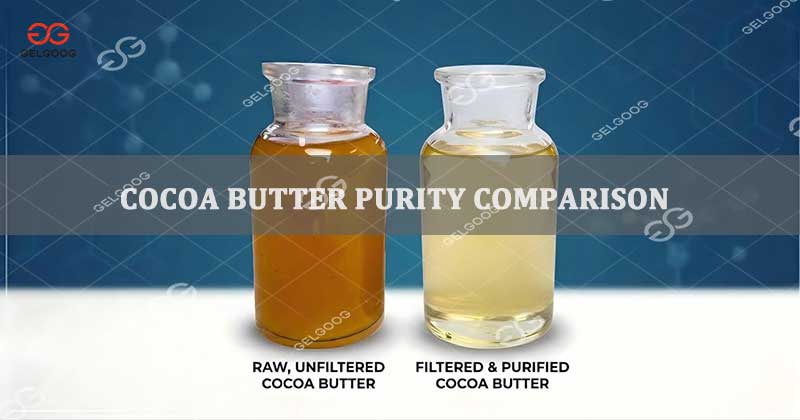
There is a second reason the step matters more for cocoa than for other fats. Cocoa butter used for chocolate must stay in stable crystal form, and any leftover solid or soap residue interferes with tempering later. Filtering the butter clean — and doing it while it is still hot enough to flow — is what lets the same butter go straight into the deodorizer or the filling line without a second processing pass. In a full cocoa butter line the order runs: pressing, then filtration, then deacidification and deodorization, which is where the cocoa butter deodorization machine takes over.
How to Filter Clarified Cocoa Butter: The Plate-and-Frame Step
The standard way to filter cocoa butter is a plate-and-frame filter. Here is how to filter clarified cocoa butter through one, step by step:
Prepare the filter. Lay a filter cloth over each filter plate before the run starts. The cloth is what actually catches the solids, so it has to be seated flat with no folds that would let unfiltered butter slip through.
Feed under pressure. A pump pushes the hot cocoa butter through the pipes into the filter. Keep the butter hot through this stage — warm butter flows and filters cleanly, while butter that has begun to cool turns thick and clogs the cloth early.
Collect the clear butter. The filtered cocoa butter flows out through a row of taps into a collection tray below, then into storage tanks. Watch the first output from each run; it tells you immediately whether the cloth is seated and the pressure is right.
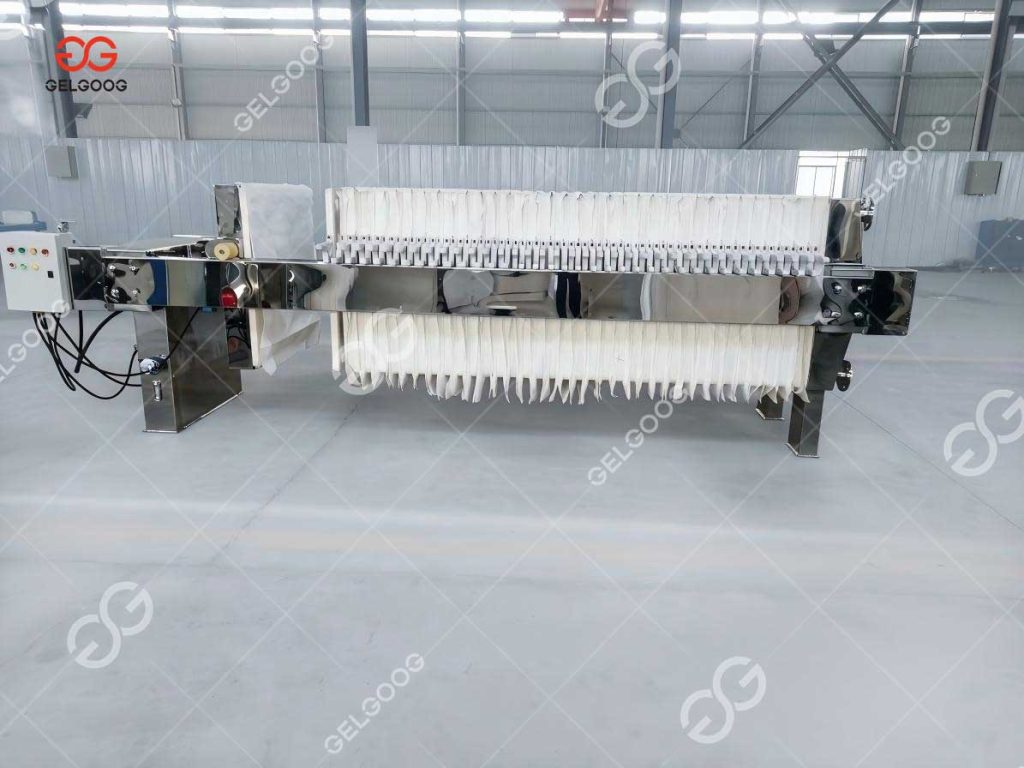
The filter sits right after the press, so the butter it receives comes from the automatic cocoa butter extraction machine. Getting the filter right here means the later refining stages start from a cleaner feed and finish faster.
Recovering What the Cloth Holds
A filter cloth keeps more than impurities — it also holds cocoa butter that has not drained away. Letting that butter go to waste is a quiet cost that adds up across every batch, and it is one more reason to learn how to filter clarified cocoa butter properly rather than treat the stage as a simple sieve.
Gelgoog’s filter setup recovers it with an air sweep. After the main run, an air heater blows warm air through the filter, pushing the residual cocoa butter out of the cloth and into the collection chute, and from there into the cocoa butter storage tank. The same principle applies to the rest of the refining train: after deacidification, decolorization and deodorization, the butter is clean enough to temper and fill, and every stage that can be recovered rather than discarded keeps the yield up.
Filtering Settings and Upkeep
A few settings decide whether cocoa butter filtration runs clean every batch:
Temperature. Filter while the butter is still hot, close to the pressing temperature, so viscosity stays low and flow stays steady.
Cloth condition. The filter cloth is the working part. Rinse or replace it on a schedule — a clogged cloth drops throughput and raises pressure, and a torn one lets solids straight through.
Pressure. Watch the feed pressure. A rising pressure with falling flow almost always means the cloth is loading up and needs attention, not that the pump should be pushed harder.
Upkeep is simple but fixed. Clean the plates and the collection tray after each run so no stale butter sits on the surfaces and contaminates the next batch. Check the seals on the taps and the air-sweep line, and store the cloth clean and dry between runs. Once you have how to filter clarified cocoa butter running consistently, the stage becomes a set-and-forget part of the processing line — quiet, steady, and invisible in the final product.
Send Gelgoog your target butter output and the source of your beans, and we will size the filter and the recovery system to your line.