Most people blame humidity, but a cocoa powder clump is not mainly a moisture problem — it is a fat problem. Cocoa powder clumps when the fat inside it melts, migrates to the particle surface, and glues the particles together. This guide explains the two conditions that trigger a cocoa powder clump, why a dry warehouse does not save you, and where each cocoa powder caking is actually decided.
What Triggers a Cocoa Powder Clump
A cocoa powder clump forms only when two things happen at once: the powder is high in fat, and the storage temperature rises high enough to melt that fat. This is the finding of the study that first imaged the mechanism, Petit et al. (2017) in the Journal of Food Engineering. The researchers stored cocoa powder at two water activities, 0.2 and 0.7, and found almost no difference in caking between them. Humidity barely mattered. Only the fatty powders held at 40°C caked significantly, and under a microscope the particles showed fat bridges joining them together.
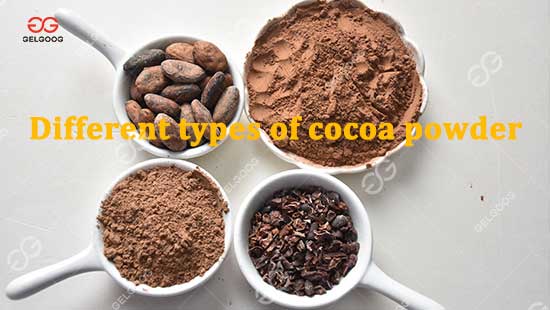
This is why cocoa powder caking keeps catching buyers off guard. A spec sheet that says the powder is dry tells you nothing about the fat. The cocoa butter inside softens around 35°C, and once it melts it does not stay put. It moves to the surface, coats the particles, and turns free-flowing powder into a solid block.
Why Dry Storage Does Not Stop Caking
A cool, dry warehouse helps, but it does not remove the risk, because the fat is already moving at room temperature. A follow-up study by Jacquot et al. (2016) found that free fat increases in cocoa powder stored at both 20°C and 40°C. What changes is the speed. At 20°C a cocoa powder clump builds slowly over weeks; at 40°C the fat melts and migrates fast, so the powder cakes in days. The fatty-acid profile stays the same the whole time, which confirms the point: this is physical migration, not oxidation or spoilage.
So the real lever is not the warehouse thermostat. It is the fat content locked in at the press, plus the temperature the powder meets after it leaves the mill. A powder pressed to a low fat level survives a warm container far better than a high-fat one. That decision is made upstream, and it is the strongest control you hold over cocoa powder caking.
Where a Cocoa Powder Clump Is Decided
Because fat is the cause, the equipment that makes the powder is where cocoa powder caking is prevented, in three places.
First, the press sets the fat level. Standard cocoa powder runs 11–22% fat, and the more fat left in, the more prone the powder is to cocoa powder caking. Pressing the cake to a lower residual fat gives you a powder that stays loose longer.
Second, the grinder sets the particle size. Finer particles have more surface area, which means more surface for melted fat to coat. This is where grinder selection matters: the cocoa powder grinding machine line holds a stable, uniform particle size. The GG-CQM ball mill and the GG-JMS colloid mill grind the liquor cleanly, while the GG-S20B and GG-S60B dry grinders cover 20 to 120 mesh so the fineness matches the application instead of running finer than it needs to be.
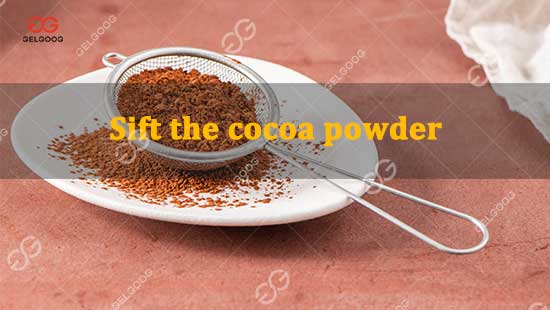
Third, the screening stage breaks up any soft lumps that form before packing. A gentle de-agglomeration pass after the mill restores free flow, so the powder leaves the plant loose instead of already starting to cake.
How Gelgoog Helps You Prevent Cocoa Powder Caking
The fix is a set of machines that control fat, particle size and temperature together, rather than one magic machine. Gelgoog sizes the press, the grinder and the screening stage as a single system so a cocoa powder clump never gets the chance to form. If your powder is caking in the warehouse or in the container, tell us the fat content, the particle size you run, and how it is stored, and we will point to the stage that is pushing it over the edge.
Send Gelgoog your target fat level, mesh size and output, and we will recommend the press, grinder and screening setup that keeps your powder free-flowing from the mill to the customer.