Problems in industrial cocoa powder production rarely start at the grinder. Fineness, output, temperature and powder quality are shaped by what happens upstream — roasting, winnowing and cocoa butter pressing — long before the cocoa cake reaches the mill. Effective cocoa powder manufacture troubleshooting therefore means reading the whole line, not just the last machine on it.
A typical cocoa powder processing line runs:
Cocoa Beans → Roasting → Cracking & Winnowing → Cocoa Nibs → Grinding → Cocoa Liquor → Cocoa Butter Pressing → Cocoa Cake → Cocoa Powder Grinding
Because every stage feeds the next, a symptom that appears in the final powder may have been created several machines earlier. Most production issues show up as one of these symptoms:
- The powder is too coarse
- Fineness is inconsistent
- Grinding temperature runs too high
- Output is lower than expected
- The grinding equipment blocks frequently
- Powder quality varies from batch to batch
None of these has a single cause. Uneven fineness, for example, can come from unstable feeding, unsuitable grinding conditions, changes in cocoa cake properties, or worn grinding parts. In practical cocoa powder manufacture troubleshooting, the first step is always to identify the exact symptom before touching any machine setting.
Why Is Cocoa Powder Too Coarse or Uneven?

Fineness complaints are the most common issue in cocoa powder manufacture troubleshooting. For most industrial uses, cocoa powder should reach a fineness of around 200 mesh. If the finished powder comes out coarse, the cause is usually in one of three places: the cocoa cake, the feed rate, or the grinding condition.
Common causes include:
- The cocoa cake is not suitable for the selected mill settings
- The feeding rate is too high
- Grinding settings do not match the required fineness
- The grinder is running under excessive load
- Grinding conditions drift during continuous production
Uneven fineness usually points upstream rather than to the mill itself. The cocoa butter content of the cake, the cake structure and the pressing conditions all change how the material fractures during milling. For stable cocoa powder grinding, keep the feed rate and the grinding condition as constant as possible — and check the cake before you increase grinding intensity.
Why Does Cocoa Powder Overheat During Grinding?
Cocoa powder grinding turns mechanical energy into heat, and cocoa makes this worse: as its fat warms, the powder softens, smears and blocks instead of flowing. When powder temperature climbs unexpectedly, work through the line in this order:
Feed rate → Machine load → Grinding condition → Cooling system → Equipment condition
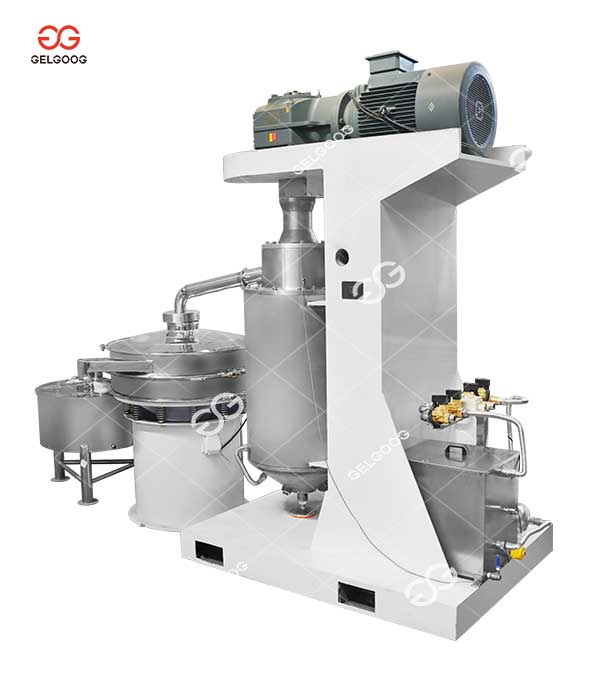
An excessive feed rate overloads the grinding chamber, and overly aggressive settings add friction. Both push the temperature up. Cooling is therefore part of equipment selection, not an afterthought — on Gelgoog lines the milling section is built with temperature control in mind, so heat is removed as it is generated.
If high temperature arrives together with unstable fineness or falling output, treat them as one problem, not three — in troubleshooting terms they usually share a single root cause.
Low Output, Blockage and Unstable Powder Quality
Low output is often blamed on the grinder when the real mismatch is between machines. The rated capacity of the mill has to match the cocoa cake supply, the conveying system and the packaging section — a mill cannot run steadily above or below the rate the rest of the line delivers.
Possible causes include:
- The feed rate is too low, or the cake supply is unstable
- Mill capacity is insufficient for the production target
- Excessive grinding resistance, often from unsuitable cake
- Grinding conditions are too restrictive
- Upstream pressing is producing inconsistent cocoa cake
Frequent blockage, especially together with rising temperature, usually means the mill is running beyond a stable condition. And if powder quality changes from batch to batch, check the consistency of the roasted beans, the nibs, the cocoa liquor and the pressing conditions before adjusting the mill. This is why cocoa powder manufacture troubleshooting has to cover the complete chain rather than the final grinder alone.
Troubleshooting Checklist for Cocoa Powder Manufacture
The table below is a practical starting point for cocoa powder manufacture troubleshooting — match the symptom first, then check in the order shown.
| Problem | Possible Causes | What to Check |
| Powder too coarse | Unsuitable grinding conditions or feed material | Grinder settings, feed condition, milling stage |
| Uneven fineness | Unstable feeding or inconsistent cocoa cake | Feed rate, cake condition, machine operation |
| High grinding temperature | Excessive load or insufficient cooling | Machine load, grinding conditions, cooling |
| Low output | Capacity mismatch or high grinding resistance | Actual throughput vs. equipment capacity |
| Frequent blockage | Overfeeding, heat or material build-up | Feed condition, temperature, mill interior |
| Unstable powder quality | Variation in upstream processing | Cocoa cake and grinding conditions |
Then work from upstream to downstream:
Raw Material → Roasting → Winnowing → Cocoa Liquor → Butter Pressing → Cocoa Cake → Milling → Final Powder
This sequence prevents unnecessary adjustments to the grinder when the real problem started earlier in the cocoa powder processing line.
Kesimpulan
Industrial cocoa powder production needs steady control across roasting, winnowing, pressing and grinding. When a problem appears, identify the exact symptom first, then check material condition, capacity, feed rate, settings, temperature and cooling — in that order.
For cocoa powder manufacture troubleshooting, the objective is not to grind harder. It is to find the operating condition that delivers the required fineness and output while the process stays stable. Treating cocoa powder grinding as part of the complete cocoa powder processing system is what turns repeated adjustments into a permanent fix.
Gelgoog designs cocoa powder processing plants as integrated lines — from bean cleaning and roasting through pressing and milling — so that capacity and fineness targets are matched across every stage. If you are planning a new line or trying to stabilize an existing one, contact us for a configuration built around your production target.
Soalan Lazim
Sekitar 200 mesh untuk kebanyakan aplikasi perindustrian. Jika dikitaran serbuk koko tidak dapat mengekalkan kehalusan itu secara konsisten, periksa kek koko dan kadar suapan sebelum menukar tetapan kilang.
Biasanya haba. Pengilangan memanaskan lemak dalam serbuk; apabila ia lembut, serbuk itu comot dan terkumpul. Kurangkan kadar suapan, ringankan keadaan dikisar dan periksa penyejukan.
Control the upstream stages, not just the mill: roast the beans to below 5% moisture, keep winnowing and pressing conditions stable, and feed the mill a consistent cocoa cake at a steady rate.