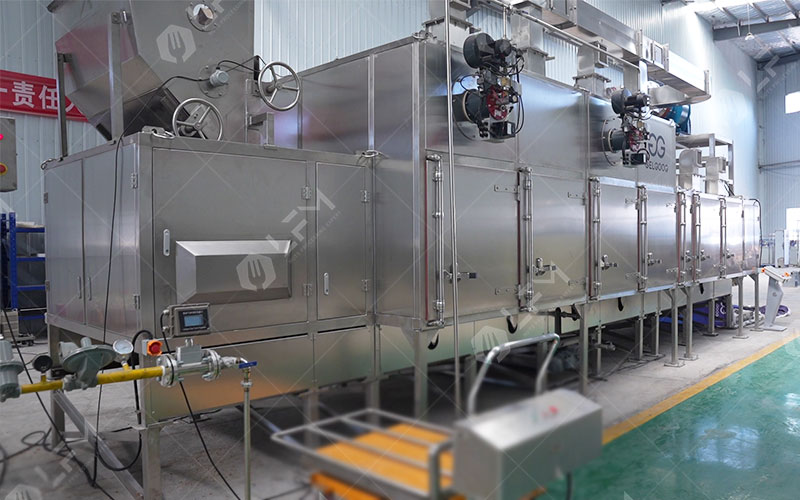
La temperatura de tueste de los granos de cacao es un factor crítico que determina el perfil de sabor final y la calidad del chocolate. A diferencia de los granos de café, que pueden tostarse en un amplio rango de 200–230 °C, los granos de cacao requieren un tratamiento térmico más suave y preciso. La precisión en el control de la temperatura de los equipos industriales de tueste de cacao determina directamente la consistencia del sabor y la estabilidad de producción de cada lote.
Rango típico de temperatura de tueste: 120–160 °C
Según los estándares de la industria, el rango típico de temperatura de tueste para los granos de cacao es de 120 °C a 160 °C, con una duración del proceso de 15 a 90 minutos. Dentro de este rango, incluso un aumento de un solo grado en la temperatura puede provocar cambios significativos en el perfil de sabor:
- Tostado a baja temperatura (110–120 °C)Conserva más acidez frutal y notas florales; el sabor es crujiente y vivo, con aromas de bayas y cítricos.
- Tostado a temperatura media (120–135 °C)La acidez disminuye, creando un equilibrio entre notas frutales y a nuez con un aroma redondeado y con cuerpo; esta gama es la preferida para la mayoría de los chocolates finos. Las investigaciones también indican que 130–135 °C es el rango de temperatura óptimo para minimizar el amargor y la astringencia en los granos de cacao.
- Tostado a alta temperatura (135–150°C)La acidez disminuye significativamente, destacando notas de caramelo, frutos secos y cacao intenso, aunque esto también aumenta la probabilidad de desarrollar matices amargos o ahumados.
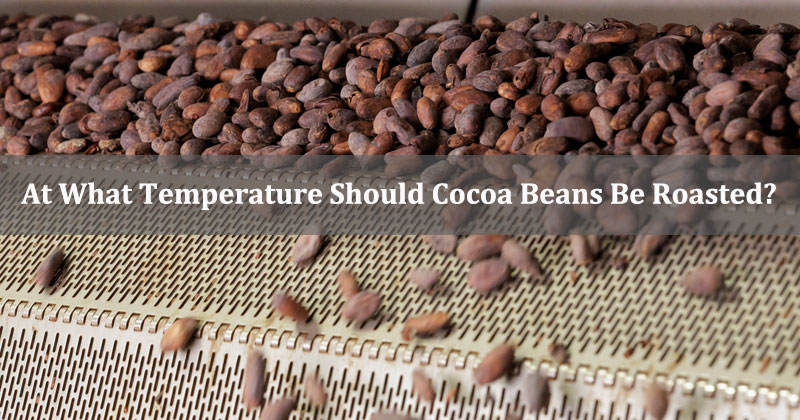
Equipo industrial: Control de temperatura de precisión
En las operaciones de tueste industrial, la temperatura configurada no siempre coincide con la temperatura real de tueste; la lectura de la temperatura interna debe servir como el estándar definitivo. Industrial profesional Equipos de tostado de cacao emplea tecnologías como el control de perfiles de temperatura de múltiples etapas, una combinación de calentamiento por convección y conducción, y monitoreo de humedad en tiempo real para garantizar una transferencia de calor uniforme en cada grano. Trazar un perfil de tostado detallado —que registre tanto las temperaturas del grano como las del horno— para cada lote es un paso crucial para lograr la consistencia del sabor en múltiples lotes de producción.
Enfriamiento: La etapa final crítica del tueste
Si los granos de cacao no se enfrían rápidamente después del tueste, el calor residual hace que sigan “cocinándose”. Los equipos de grado industrial suelen contar con sistemas de enfriamiento rápido que introducen aire frío en la masa de granos bajo presión negativa, deteniendo con precisión el proceso de tueste.
Desde el establecimiento de perfiles de temperatura hasta la transición a la fase de enfriamiento, cada paso depende de la precisión de los equipos de tueste industrial profesionales. Descubra nuestros Equipos de tostado y enfriado de cacao y vea cómo su precisión de control de temperatura de ±1 °C y sus perfiles programables multietapa ofrecen un sabor constante y excepcional para cada lote de granos de cacao.